A week in a Yunnan village


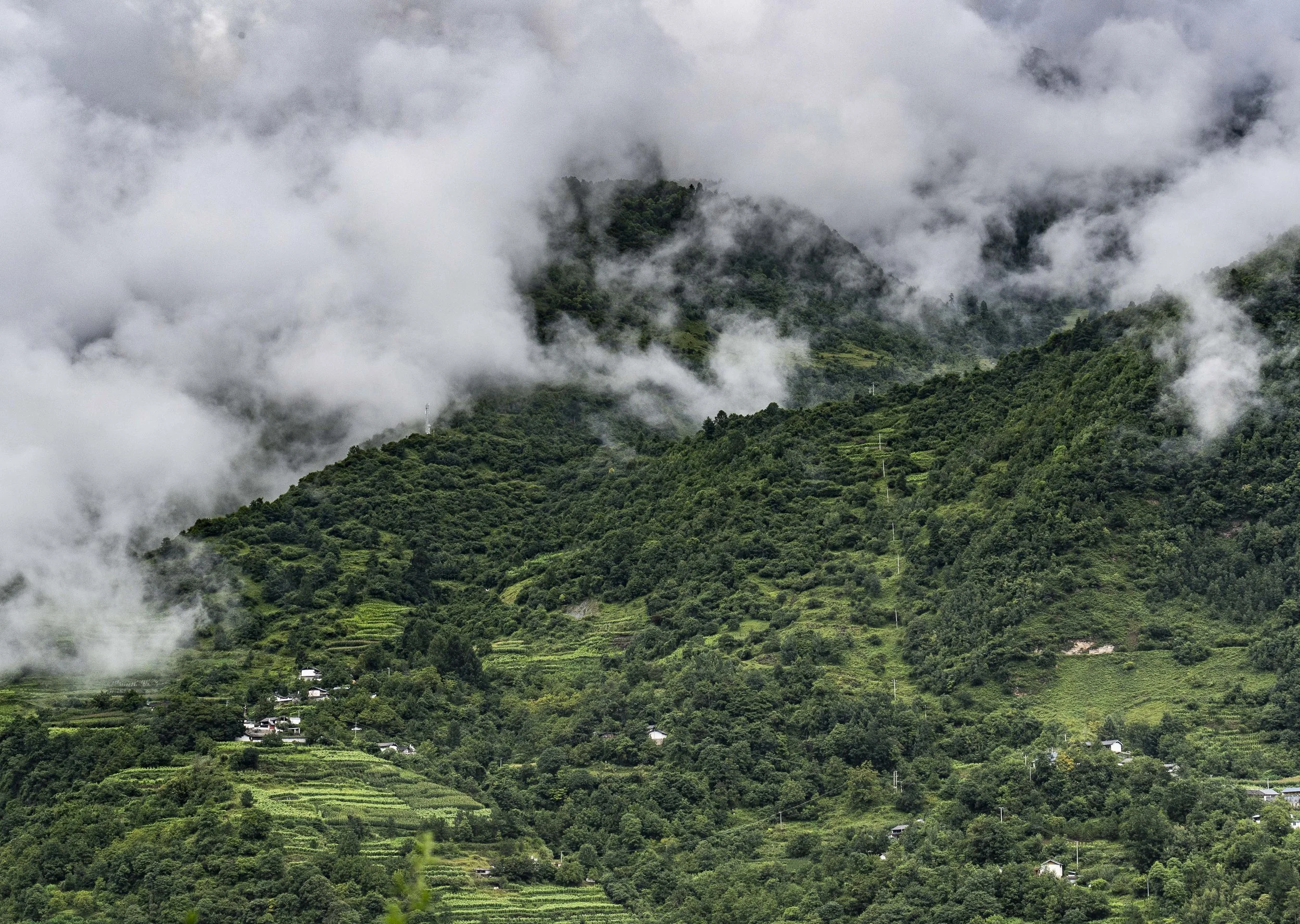
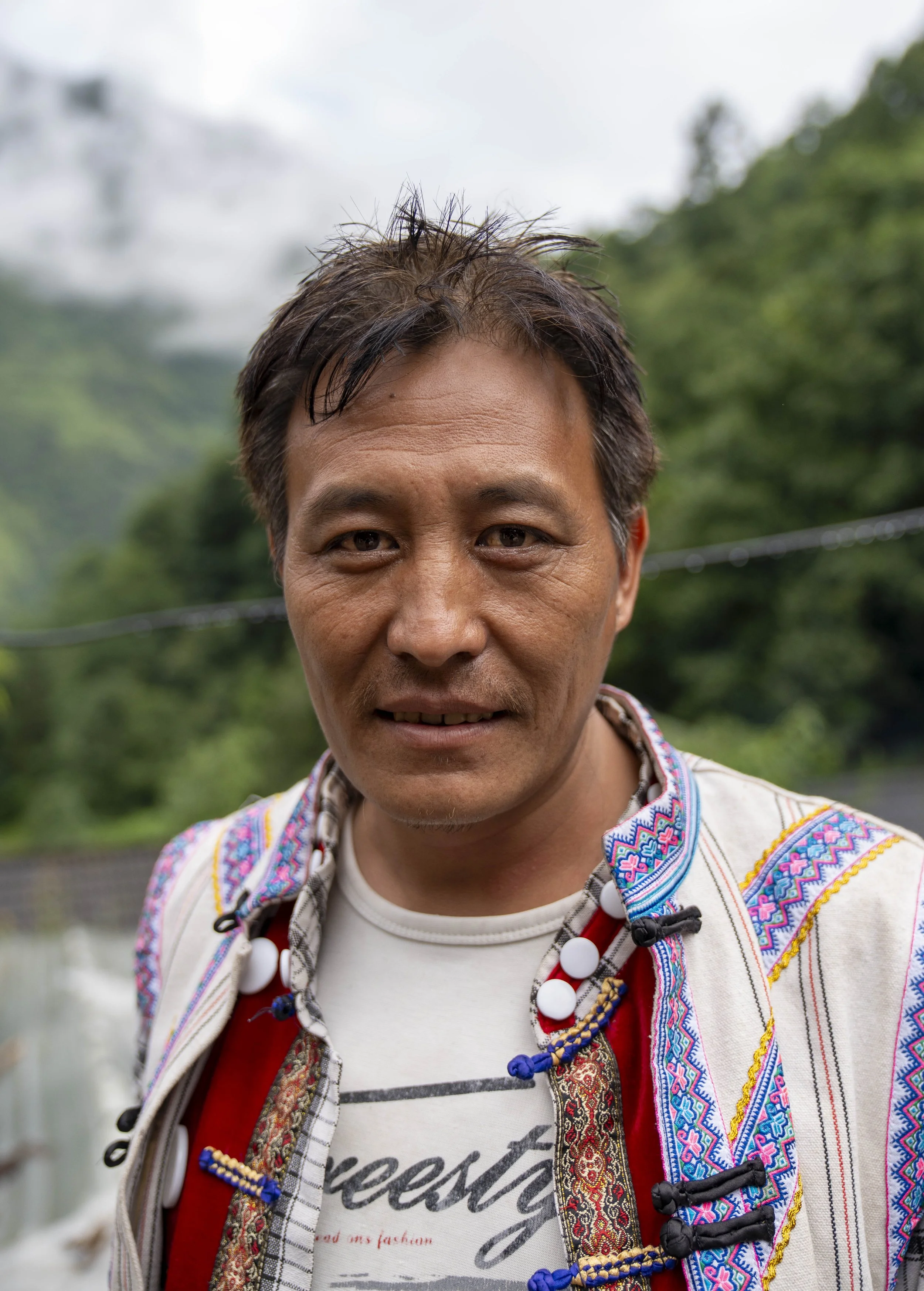
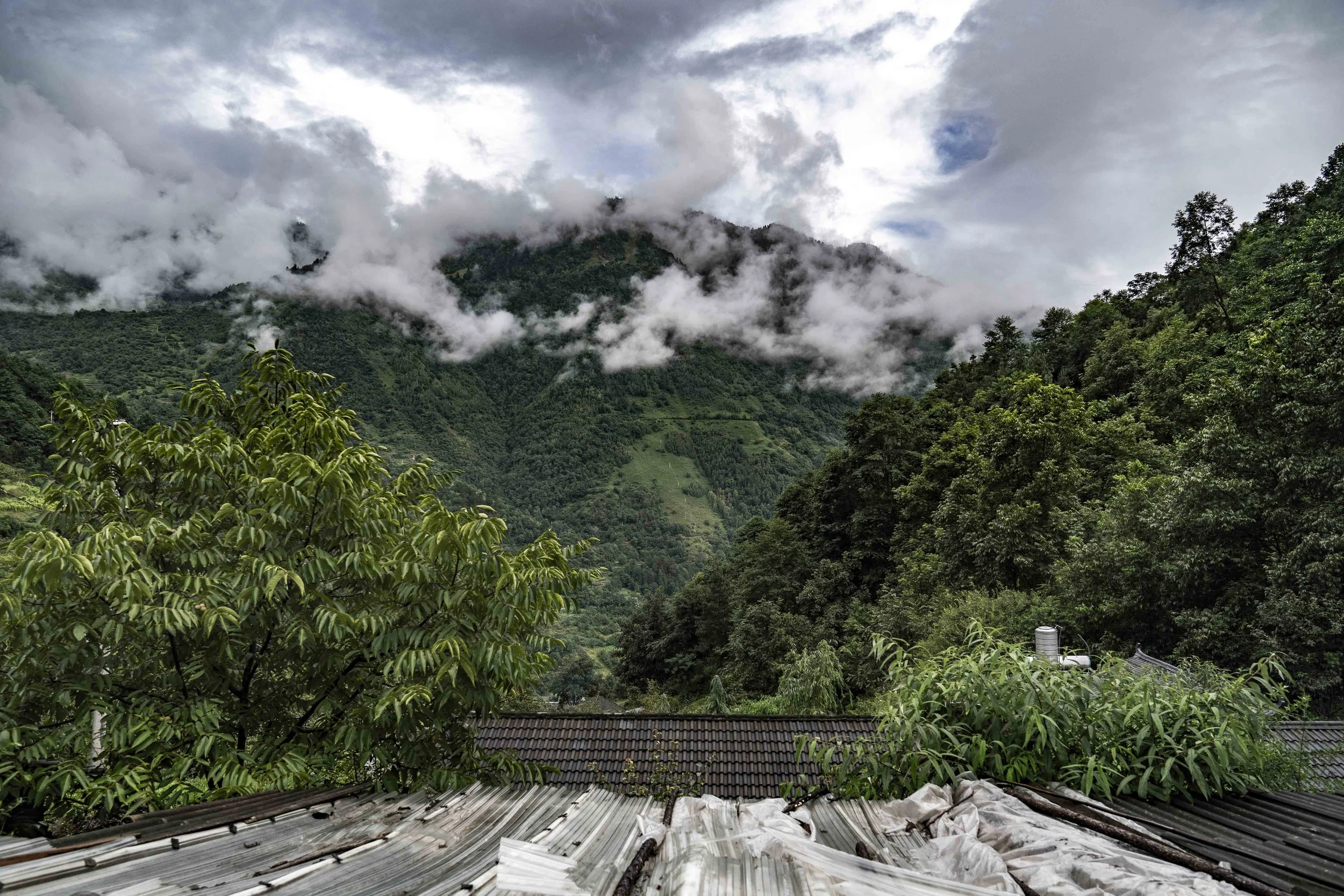
Along the Jinsha River, where the water narrows between mountain walls before dissolving into the mists of Yunnan, lie the valleys of the small town of Jinjiang. The landscape unfolds as a succession of humid hills and mountain folds that late summer renders almost too green. When I arrived, the air was heavy, charged with a humid warmth that clung to my clothes. Sudden downpours swept down the mountain slopes, leaving behind a dense vapor rising from the forest.
The road to reach Shida Village runs roughly along the bed of the Jinsha, a tributary of the Yangtze. It is paved but fragile, subject to the whims of the climate, with cracks, landslides, and slippery stretches whenever the rain falls. At times, between two sharp turns, the river appears below, wide and dark, moving slowly as if indifferent to everything around it.
Shida sits in this vibrant, humid landscape. The village is surrounded by cultivated fields stretching in wide organized strips: cornfields, flooded plots, and especially vast tobacco plantations that give the air a lingering scent. The dry, slightly sweet smell of the leaves drying in the barns mixes with the stronger, acrid scent of the tobacco smoked inside the houses. Both mingle with the odors of wet earth and damp wood to create the distinctive olfactory signature of rural China.
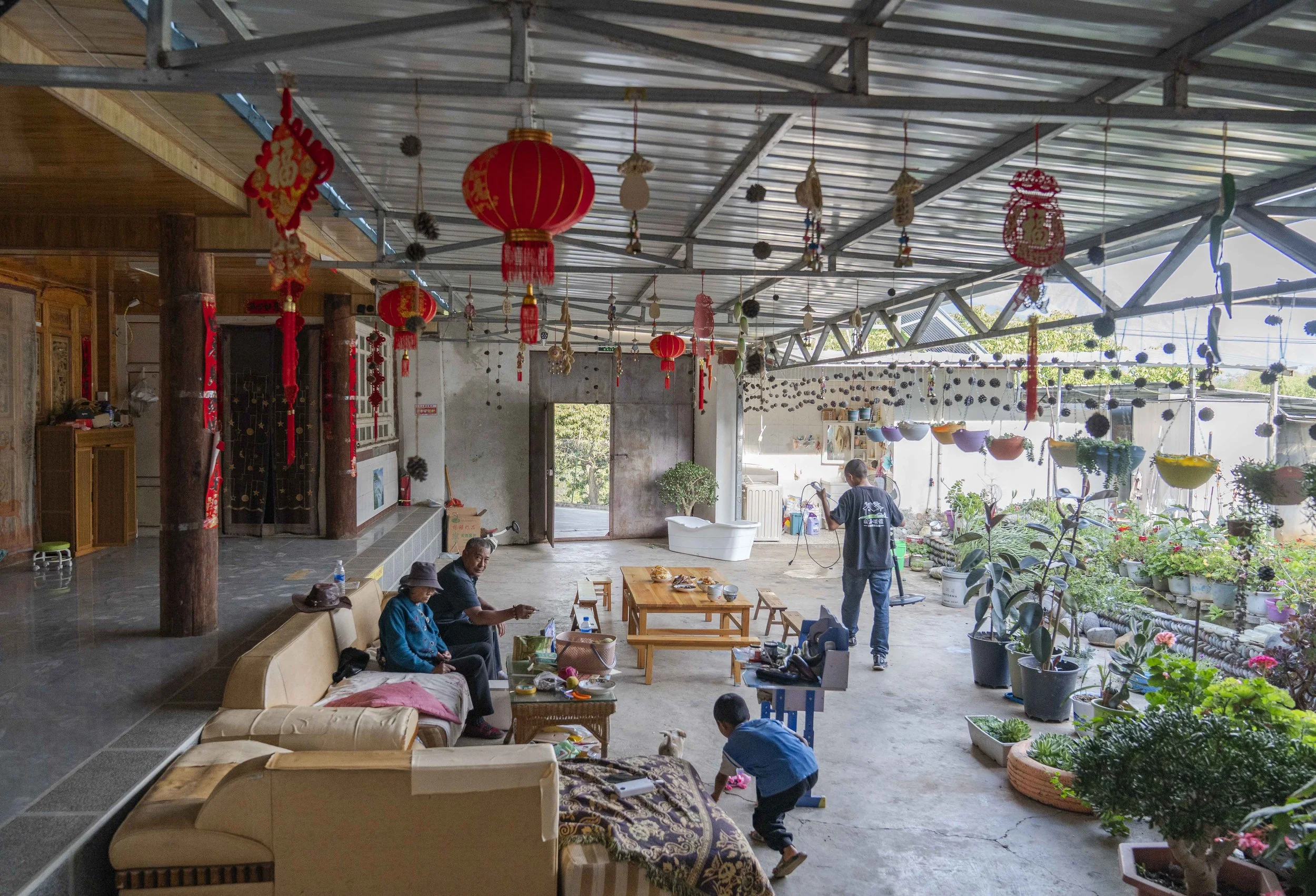
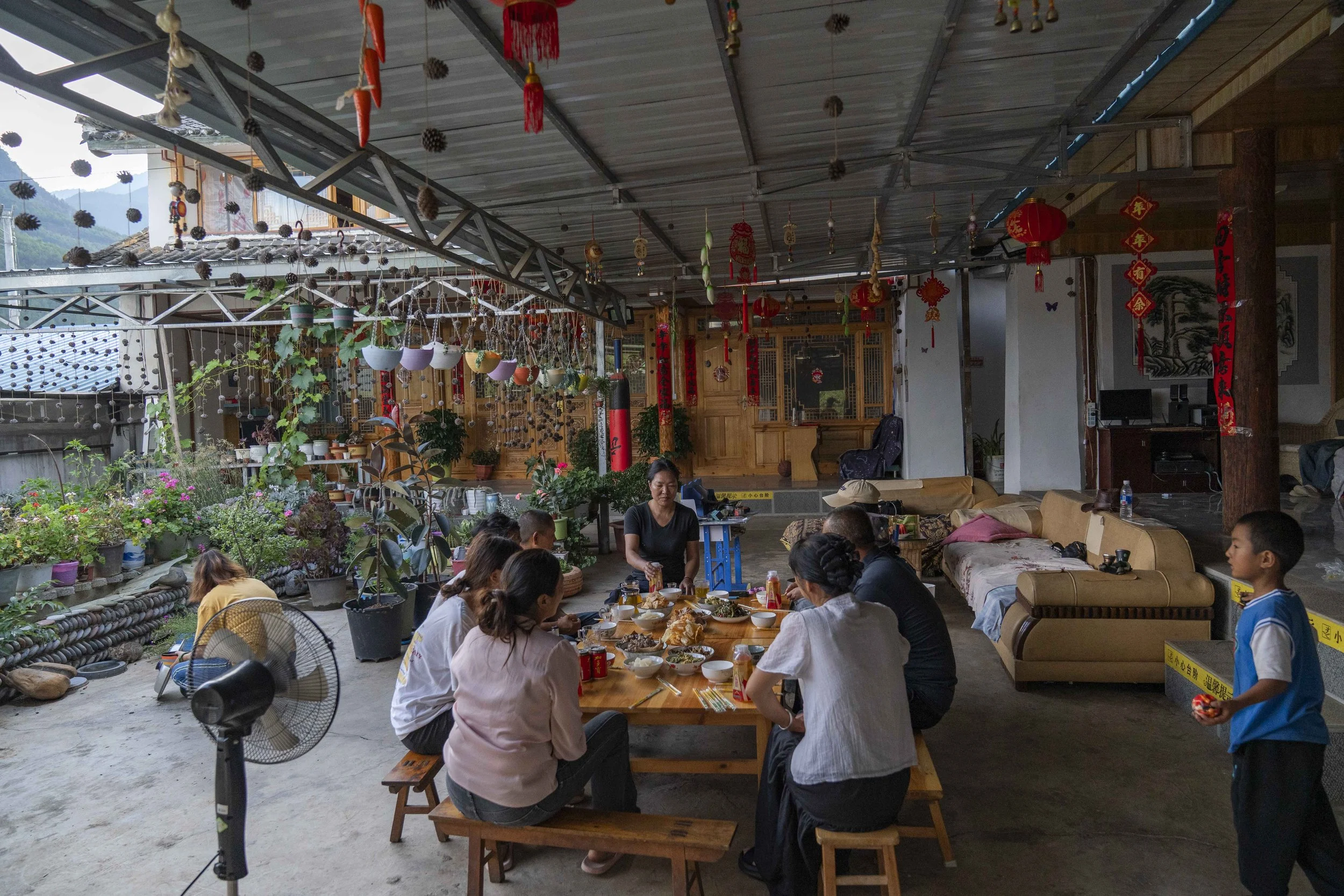
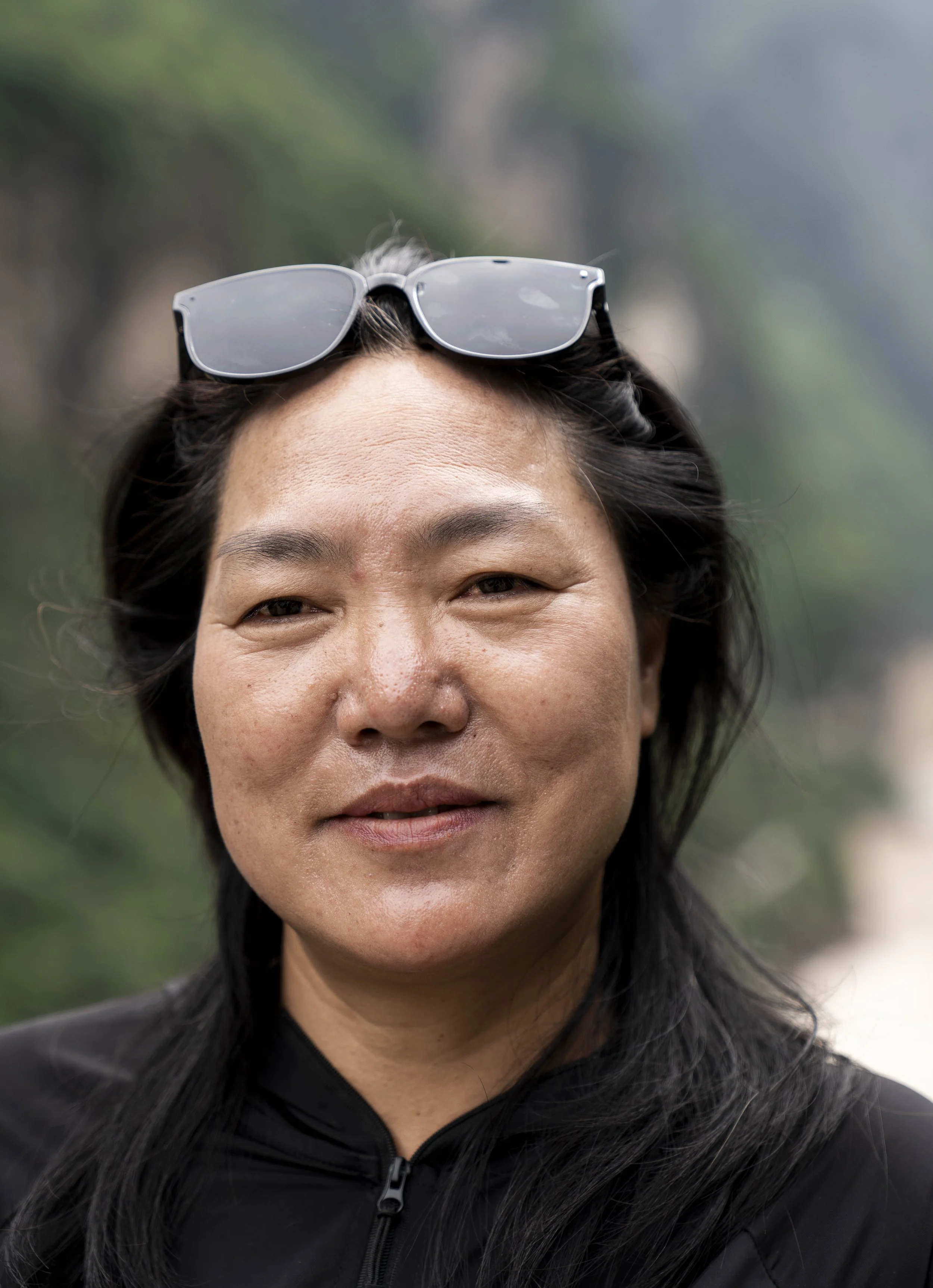
My journey had begun in Kachgar, before flying to Chengdu and then Lijiang, where I found my first contacts. They guided me to my two hosts, Madame Shen, calm and attentive, and her daughter Jamjam, lively and curious, whose command of the local Mandarin made every encounter possible. They welcomed me into their simple but lively home and opened a network of human connections that I could never have reached on my own.
With them, I explored the surrounding villages. The paths were often slippery, bordered by bamboo dripping with rain. Sometimes we passed areas where the scent of drying tobacco hung over the fields, carried by the wind. At every stop, a neighbor would offer a chair, a cup of tea, or a hand-rolled cigarette whose smoke mingled with the scent of damp earth. Without Jamjam translating, many of these exchanges would have remained silent. She transformed each encounter into conversation, each smile into a story.
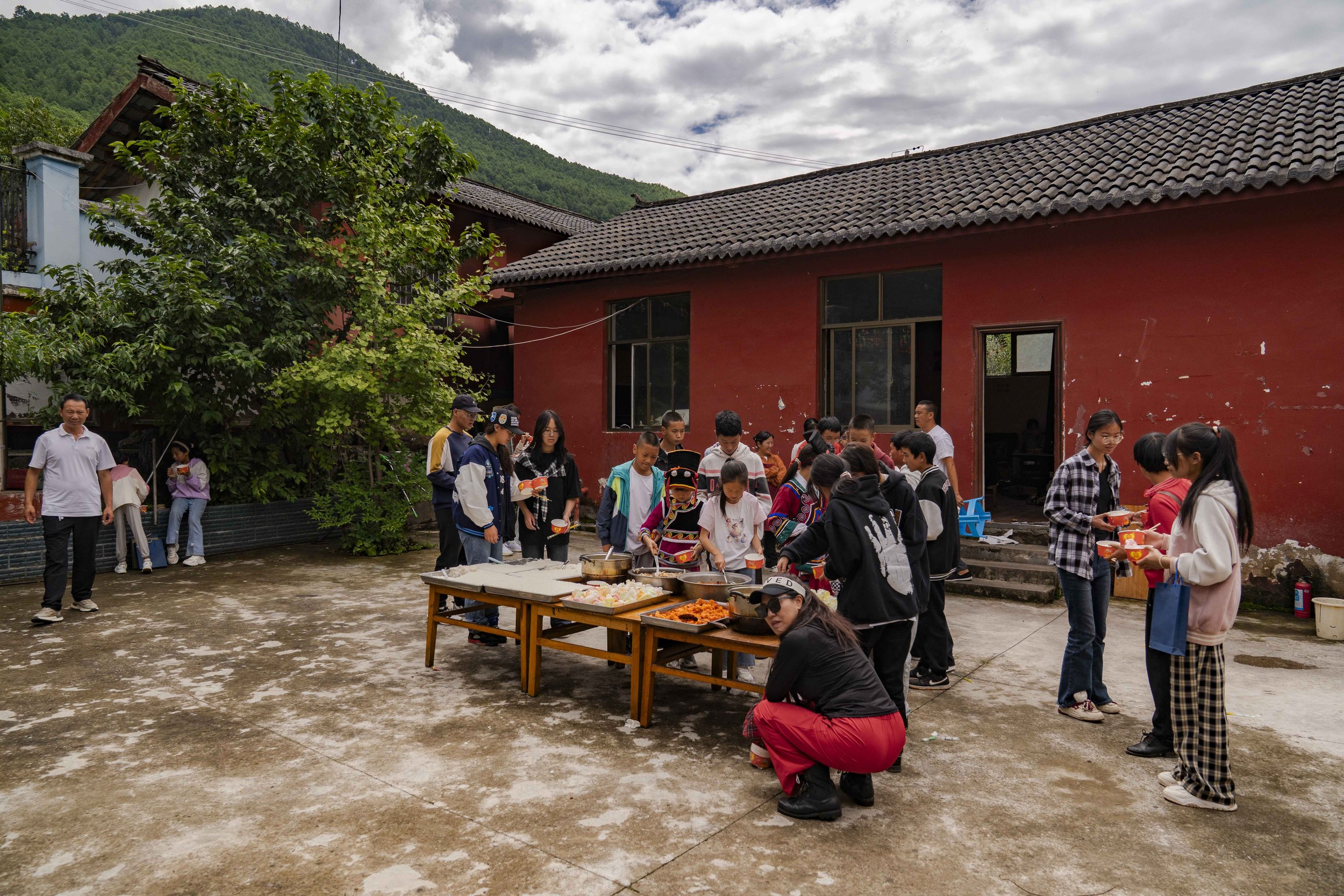
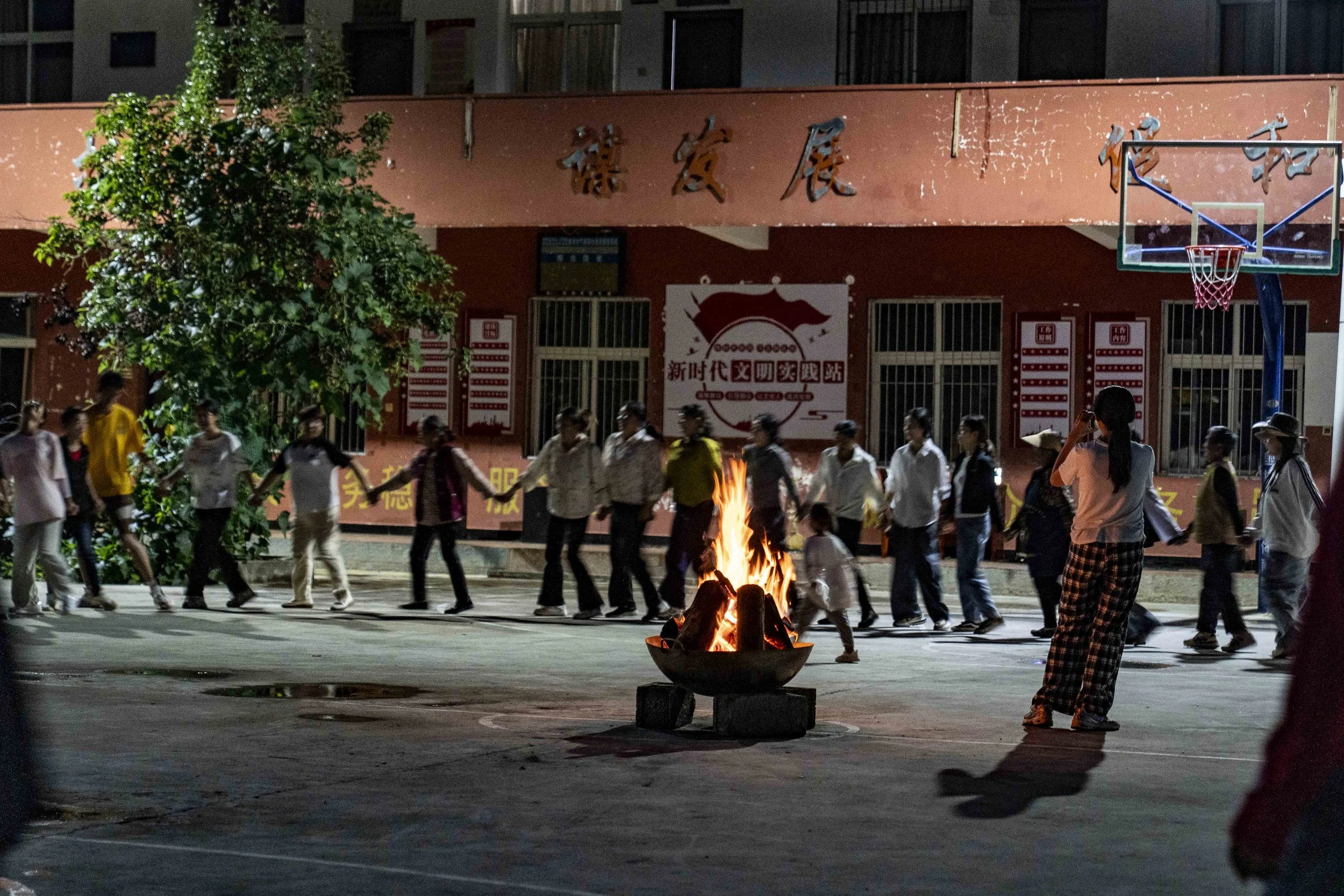
The week was marked by a cultural festival in the area, but beyond the dances and costumes, it was the everyday details that gave this place its depth. In the evening, when the heat eased slightly, cicadas filled the air with their continuous chorus, punctuated at times by the sharper chirps of crickets. Darkness fell quickly, swallowing the forest in deep black while the last wisps of tobacco smoke lingered in front of the doors.
I was told several times that I was the first foreigner to enter Shida Village. This created a particular intensity in every encounter: curiosity, caution, amusement, sometimes even pride. Everyone seemed eager to convey a fragment of this territory, as if my presence suddenly made tangible the idea that their life, their village, could exist beyond this valley.
My stay concluded with a meeting in honor of the students, attended by several provincial officials. My unusual presence led the organizers to invite me to speak. Facing rows of students in crisp uniforms, I improvised a few words about the importance of looking at one’s own territory with curiosity and of preserving what makes these villages unique, where tradition and modernization still meet tentatively.
These few days along the Jinsha River lasted only a week, but they left a lasting impression. Not because of the exoticism of a distant China, but because of the real, human, sensory density of this still-preserved rural territory, where life moves to the rhythm of rain, harvests, and the cicadas of the evening.